Anti-Money Laundering & Financial Crimes

Transfer Of Cryptocurrency On Wallets Of Other Persons & The Trap Of Benami Law

Transfer Of Cryptocurrency On Wallets Of Other Persons & The Trap Of Benami Law

Transfer Of Cryptocurrency On Wallets Of Other Persons & The Trap Of Benami Law- Pursuant to a Public Interest Litigation Vijay Pal Dalmia Vs. Union of India, Ministry of Home Affairs, Ministry of Finance & Reserve Bank of India being W.P.(C) No. 001071  / 2017 before the Supreme Court of India,  the Government of India has […]

Transfer Of Cryptocurrency On Wallets Of Other Persons & The Trap Of Benami Law Read More »

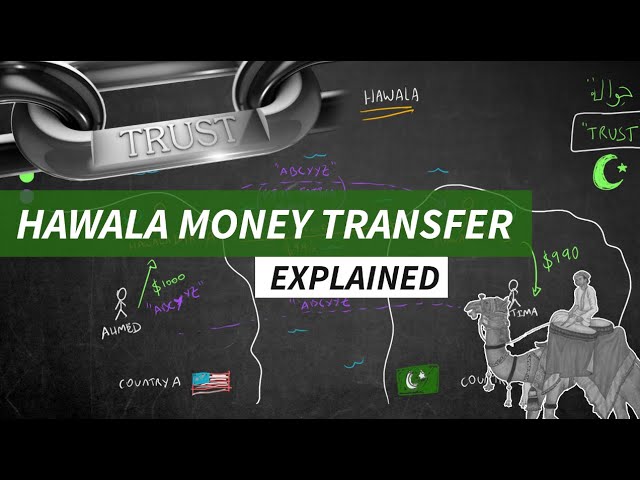
The Hawala System: An Ancient Method of Money Laundering

Unveiling the Hawala System: Money Laundering Through the Ages

The Hawala system is an ancient method of transferring money that dates back to the 8th century. It is a traditional system of transferring funds globally across geographical borders. Hawala is also known as “hundi,” which means “bill of exchange” or “promissory note” in Urdu. This system of money transfer is popular in the Middle

Unveiling the Hawala System: Money Laundering Through the Ages Read More »

Swiss Banks and Money Laundering: A Tale of Illicit Wealth and Hidden Accounts

Swiss Banks and Money Laundering: A Tale of Illicit Wealth and Hidden Accounts

Money laundering is a widespread issue across the globe, and Swiss banks are notorious for being a safe haven for illicitly obtained funds. Although many banks in Switzerland maintain ethical practices, some have been reported to overlook the origin of their clients’ funds, providing criminals with a convenient means of laundering money. In recent years,

Swiss Banks and Money Laundering: A Tale of Illicit Wealth and Hidden Accounts Read More »

Scarface and Breaking Bad Money Laundering: A Look into the Role of Legitimate Businesses

The Role of Legitimate Businesses in Money Laundering: A Study of Scarface and Breaking Bad

Money laundering is a serious criminal activity that is rampant across the world, and it involves the concealment of illegally obtained funds through a legitimate business or financial institution.  Criminals use money laundering to hide the source of their funds and make it seem like they acquired them legally. Popular media, like the movies Scarface

The Role of Legitimate Businesses in Money Laundering: A Study of Scarface and Breaking Bad Read More »

Understanding the Prevention of Money Laundering Act (PMLA) 2002

Understanding the Prevention of Money Laundering Act (PMLA) 2002

Money laundering has been a significant problem across the globe, and India is no exception. To tackle this issue, the Indian government enacted the Prevention of Money Laundering Act (PMLA) in 2002, which came into effect on July 1, 2005. The act aims to prevent and control money laundering, which involves concealing or disguising the

Understanding the Prevention of Money Laundering Act (PMLA) 2002 Read More »

Risk Categorization for Customers: What Reporting Entities Need to Know

Risk Categorization for Customers: What Reporting Entities Need to Know

Reporting entities such as banking institutions, financial institutions, intermediaries, and more have various obligations under the Prevention of Money Laundering Act (PMLA), 2002, to maintain records, access information, and perform due diligence. One of the critical aspects of due diligence is the categorization of customers according to their perceived risk levels. In this blog post,

Risk Categorization for Customers: What Reporting Entities Need to Know Read More »

Reporting entities, such as banks, financial institutions, intermediaries, etc. are responsible for ensuring that they verify the identity of their clients and maintain records of their transactions.

How to Verify the Identity of Clients for Transactions: A Step-by-Step Guide

In the modern world, businesses must conduct a certain level of due diligence before transacting with their clients. This is to prevent money laundering, terrorist financing, and other forms of illicit financial activities. Reporting entities, such as banks, financial institutions, intermediaries, etc. are responsible for ensuring that they verify the identity of their clients and

How to Verify the Identity of Clients for Transactions: A Step-by-Step Guide Read More »

Expanding the Scope of Reporting Entities: Recent Implications on Money Laundering Act Compliance

The Importance of Customer Due Diligence in Banking and Financial Institutions

Customer due diligence is the process of verifying the identity of customers before conducting business with them. It is a crucial part of the anti-money laundering (AML) and counter-terrorism financing (CTF) framework in the financial sector. Customer due diligence is a key requirement for banks and other financial institutions to identify and manage money laundering

The Importance of Customer Due Diligence in Banking and Financial Institutions Read More »

Expanding the Scope of Reporting Entities: Recent Implications on Money Laundering Act Compliance

Expanding the Scope of Reporting Entities: Recent Implications on Money Laundering Act Compliance

The Ministry of Finance has recently come out with the notification dated May 03, 2023, which widened the ambit of the term “Reporting Entity” as defined in section 2(1)(wa) read with sec. 2 (1)(sa) of the Prevention of Money Laundering Act, 2002 (‘PMLA’). Who is a Reporting Entity? As per Section 2(1)(wa) of the Prevention

Expanding the Scope of Reporting Entities: Recent Implications on Money Laundering Act Compliance Read More »

Scroll to Top