How FATF Recommendations Led to the Amendment of Section 24 of the PMLA Act, 2002

How FATF Recommendations Led to the Amendment of Section 24 of the PMLA Act, 2002

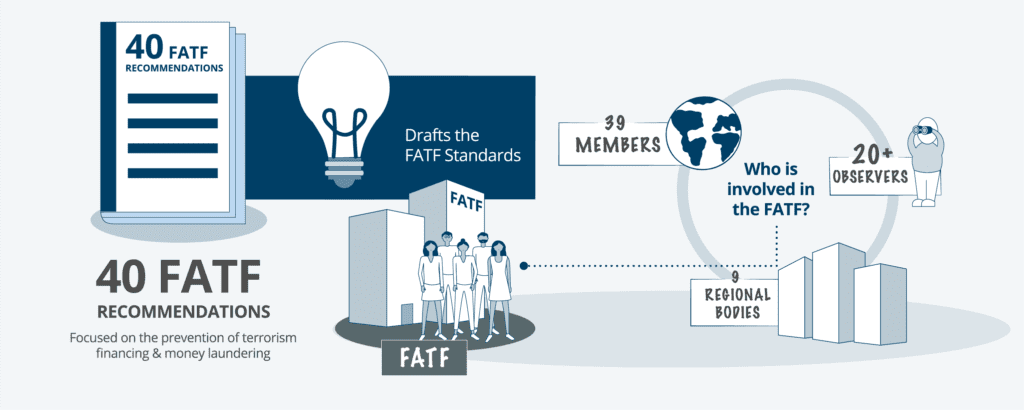
The Financial Action Task Force (FATF) is an inter-governmental body that develops and promotes policies to combat money laundering and terrorist financing. One of the significant recommendations made by the FATF was regarding the amendment of Section 24 of the Prevention of Money Laundering Act, 2002 (PMLA Act). This amendment has significant implications for both

How FATF Recommendations Led to the Amendment of Section 24 of the PMLA Act, 2002 Read More »

Best Practices for Government to Combat Money Laundering Worldwide

How Governments Can Combat Money Laundering: A Look at International Cooperation and Best Practices

Governments around the world are facing a growing challenge in combating money laundering. Money laundering is a process by which the proceeds of criminal activity are converted into legitimate funds that cannot be traced back to their illegal origins. This problem has been a major concern for governments, as it can undermine the integrity of

How Governments Can Combat Money Laundering: A Look at International Cooperation and Best Practices Read More »

Money laundering in India

The Global Menace of Money Laundering and the Role of India

Money laundering is a global menace that poses a significant threat to the financial integrity of countries across the world. This illicit activity involves the transfer of money derived from illegal activities, such as drug trafficking, terrorism, and corruption, into legitimate channels, thereby making it difficult for law enforcement agencies to track and seize the

The Global Menace of Money Laundering and the Role of India Read More »

money laundering cases

Differences in the Standard of Proof in Proceedings before the Adjudicating Authority and Special Court in Money Laundering Cases

Money laundering is a global problem that affects the economy and financial system of countries. It involves the process of concealing the true origin and ownership of illegally obtained funds. To combat money laundering, countries have established laws and regulations to prevent and prosecute such activities. India has also established laws to prevent money laundering,

Differences in the Standard of Proof in Proceedings before the Adjudicating Authority and Special Court in Money Laundering Cases Read More »

section-24-money-laundering

Exploring the Impact of Clause (a) and (b) on Money Laundering: Section 24 Demystified

Money laundering is a serious criminal offense that involves disguising the proceeds of illegal activities as legitimate funds. It is a complex and multi-faceted crime that can have far-reaching implications on the economy and society as a whole. To combat money laundering effectively, the Indian government has introduced various laws and regulations, including the Prevention

Exploring the Impact of Clause (a) and (b) on Money Laundering: Section 24 Demystified Read More »

The Burden of Proof in Money Laundering Cases

How the Burden of Proof Has Shifted in Money Laundering Cases with the Amendment of Section 24

Money laundering has become a prevalent issue across the world, and India is no exception. In India, the Prevention of Money Laundering Act (PMLA) was enacted in 2002 to combat this problem. However, with the increasing complexity of such cases, it became difficult to prove money laundering beyond a reasonable doubt. This led to the

How the Burden of Proof Has Shifted in Money Laundering Cases with the Amendment of Section 24 Read More »

Scroll to Top